Writing › AI at home
Post · October 2026
A Forgotten Bedtime Story, Saved by AI, That My Kids Won’t Let End
A forgotten voice memo of a bedtime story I made up for my son, saved with AI and turned into a video book we can flip through, with a cast ready for the next ones.
I was cleaning up my files with Claude, Anthropic's AI model, when we found it: an eight-and-a-half-minute voice memo called "Cats," recorded on a weeknight last year.
It was me at bedtime, telling my son a story I was making up as I went. One of our cats, it turns out, is secretly a dragon cat. There is an eating contest and a sleeping contest, a whale, a boy in a boat, an escape borrowed shamelessly from Pinocchio, and a dragon cat who ends up hiding in the dryer. You can hear my son asking questions, and me losing the thread and finding it again.
We listened to it for a few weeks after I recorded it. Then it got lost in my files, and I had forgotten it was there.
First, just save it
My first thought was simply to keep it somewhere safe for the long term, somewhere I could find it again, like Google Photos.
Then I wanted the file itself to say what it was. Audio files carry metadata: small labels stored inside the file, the way a song carries its title, artist and album art. So the recording got a title, the date, and a one-line description of the story and who it was told to.
Then I remembered I had Whisper installed, a free speech-to-text model that runs on my own computer. It turned the eight minutes into a transcript of about 1,100 words, and we saved that into the file too, line by line with timestamps, so anyone who opens it in the future can read along.
Last, a cover picture. The file works like a podcast episode, so when my son wanted to listen on my phone, he would see the story's cover.
Then, a video book
It looked great, and that raised the next question: what else can Claude do?
There were three options: the recording with a cover and captions, a picture book, or full animation, which required paid tools or more tokens than I wanted to spend on a quick, fun project in one night. I picked the picture book, as a video: text on the left page, a picture on the right, a page turn each time the story moves on, and the sentence I am reading highlighted so an early reader can follow along.
Getting there was a back-and-forth, and my notes from that night are mostly me steering:
- The first version fit the whole story into eight pages. "This seems like a lot per page. Could we do more pages?" It became thirty.
- Bigger and simpler on the page, for a young reader: one sentence per line, big type.
- Claude had quietly rewritten my story in simpler words, for an early reader. "Don't change the words. It should be the story as I tell it." The only edits I kept were the ones a book needs: my son's interruptions and my own stumbles came out.
- "The book really should take up the whole screen."
- I sent photos of the cats so the drawings would look like ours. The dragon cat has amber eyes and a red collar, and the collars should be thin.
It was surprisingly good, and I could have stopped there. The pages were still pictures, with small touches like a tail that wags, and one page that came out with a lot of animation. That page made me wonder how much better the whole book could be.
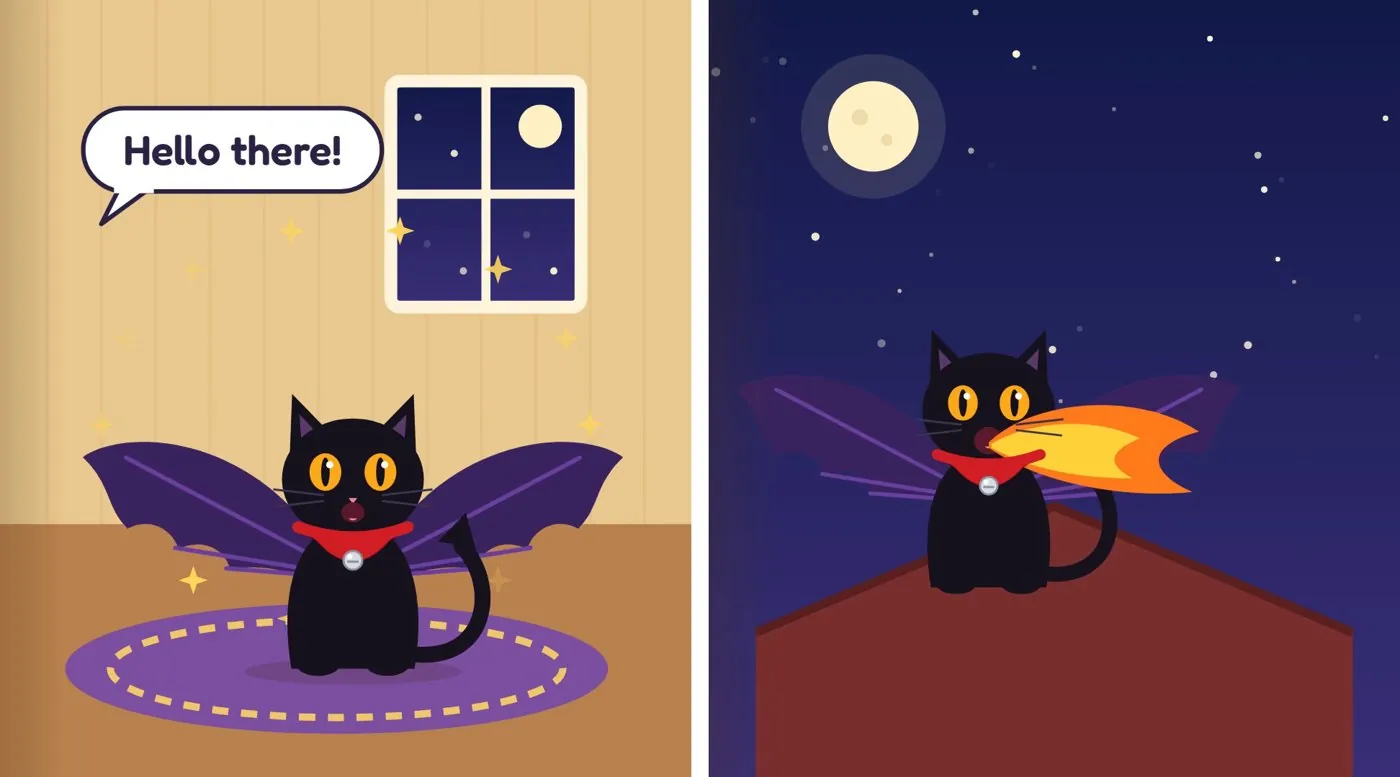
So I asked Claude to animate it. That is where it started to look hacky, and that is when I found out how Claude was doing what it was doing.
Making it better, and making it last
Again, it looked pretty good. But when I asked it to fix bugs or make changes, it had a lot of problems. The issue was how the book was being made. Claude was drawing every picture itself, by writing code: each page was an SVG, the format web pages use for drawings, written out shape by shape, one page at a time. The way it was built was very DIY: a web page photographed fifteen thousand times, one frame at a time, then stitched into a video. The drawings were not bad, but the process was not production quality yet. "This seems very hacky. Is there something better you can drive?" Claude still drew everything with code in the rebuild; what changed is that the drawings got proper moving parts.
A tool built for video. The solution was to give Claude a tool designed to render video. I chose Remotion, which makes videos from code, frame by frame, and can also show a book you flip through on a web page. It renders on my home server, and the same book can be a video for the TV or the flippable version below.
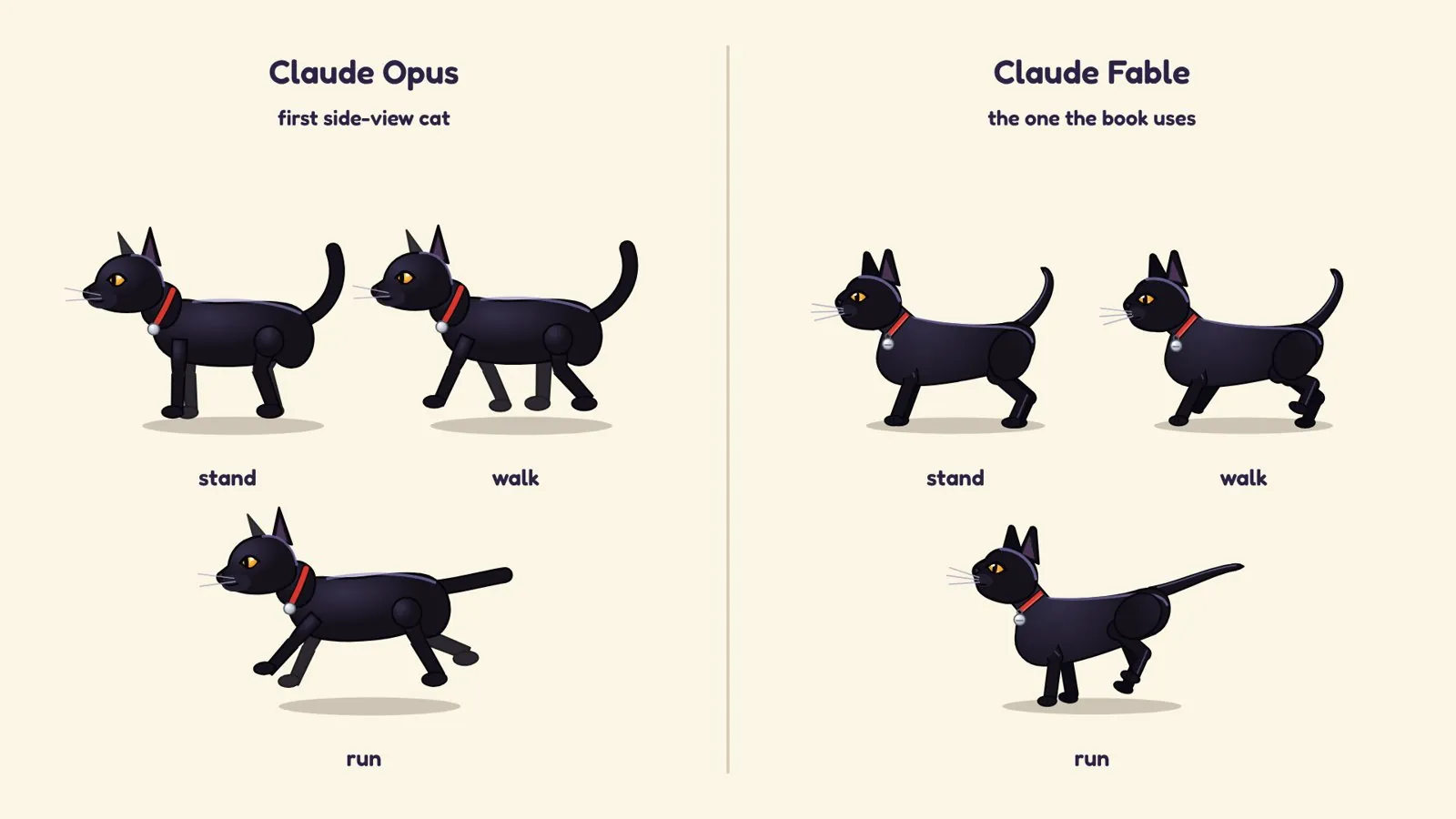
A fair test for the artist. Claude's first drawings of the new cast had started to hit their limits, like a head floating off a body or a tail growing out of the floor, caught only because every change was rendered and looked at. The rebuild so far was Claude Opus, my everyday workhorse. Would Claude's flagship model draw better still? So we ran a small, fair test: the same brief (a cat from the side, standing and walking) and the same tools, for Claude Opus and for Claude Fable. Fable's first try beat Opus's second, so Fable drew the cats. A tiny experiment, but I would not have known without running it.
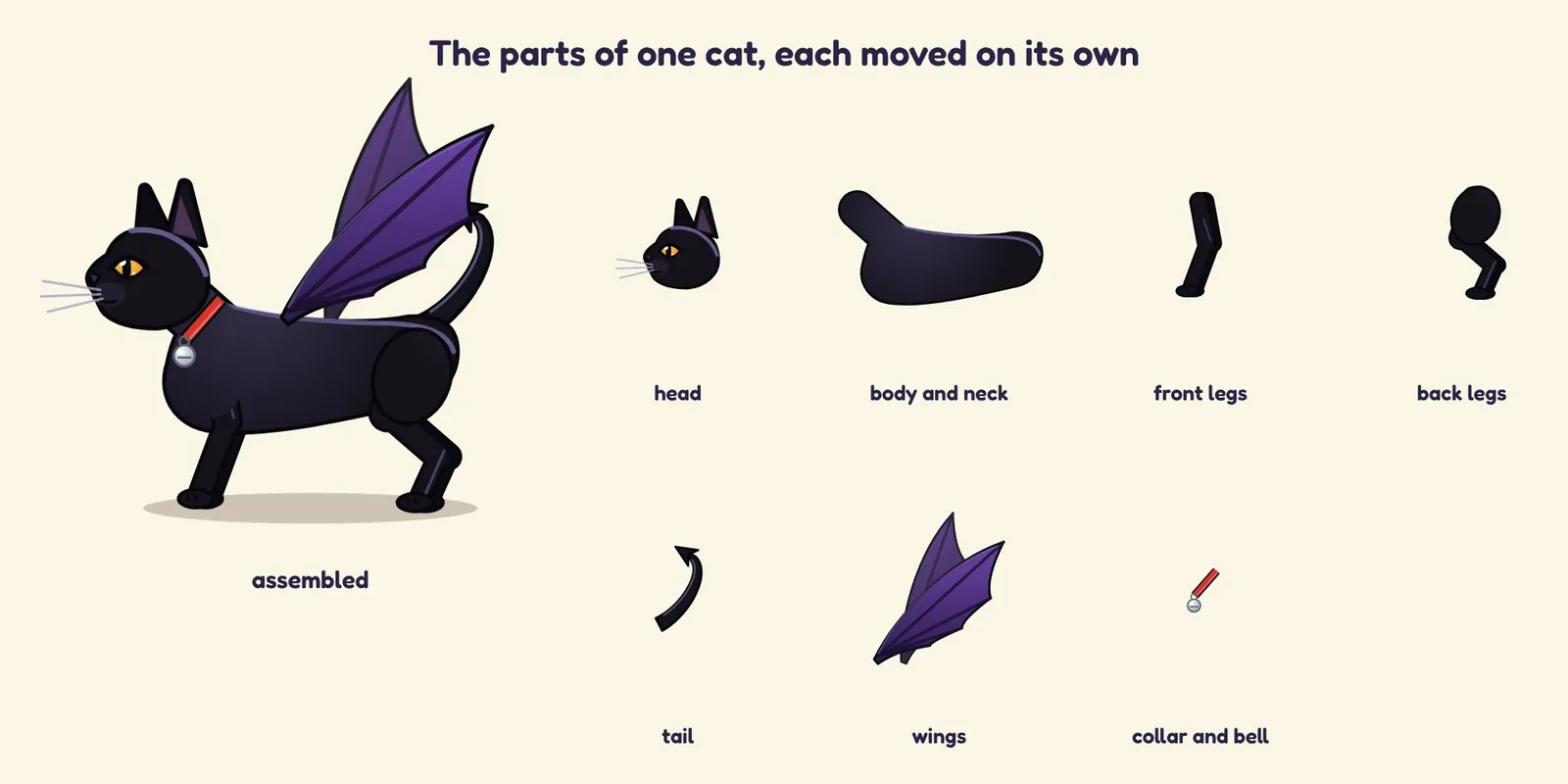
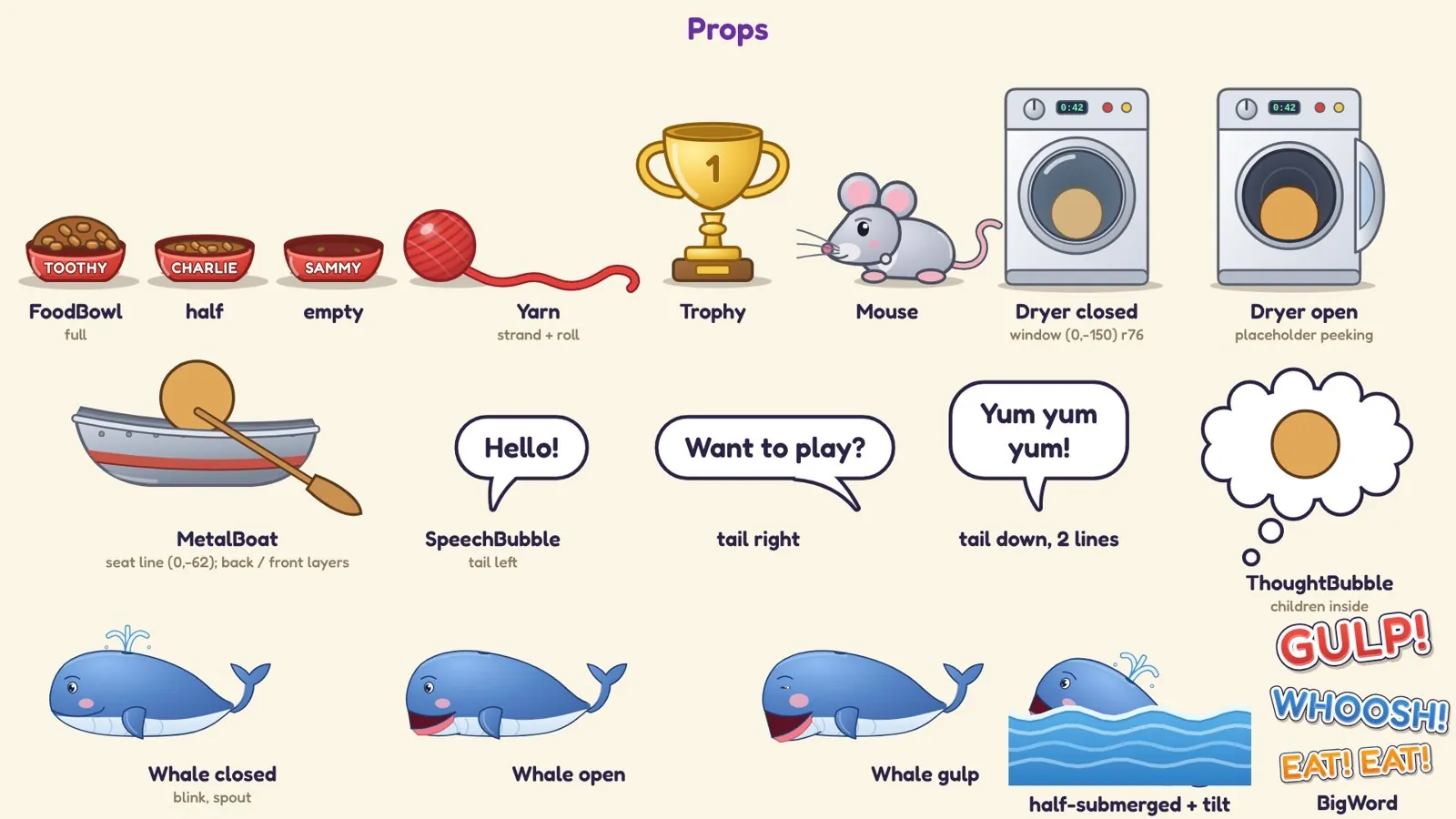
A cast, not thirty pictures. We have other recordings, and they have the same boy and the same three cats. So instead of drawing thirty pictures for one story, Claude built the characters once, the way an animation studio would. Each character is not just a set of different views: it is built from separate parts, like the head, legs, tail and wings, that Claude can use Remotion to move on their own, so a cat can walk, run, sneak, eat, fly, swim or sleep rather than slide across the page. Around them are the places (the kitchen, the bedroom, the laundry room, the town at night, the ocean, the inside of a whale), with props and effects like fire, smoke and stars. The next story starts with everyone already drawn.
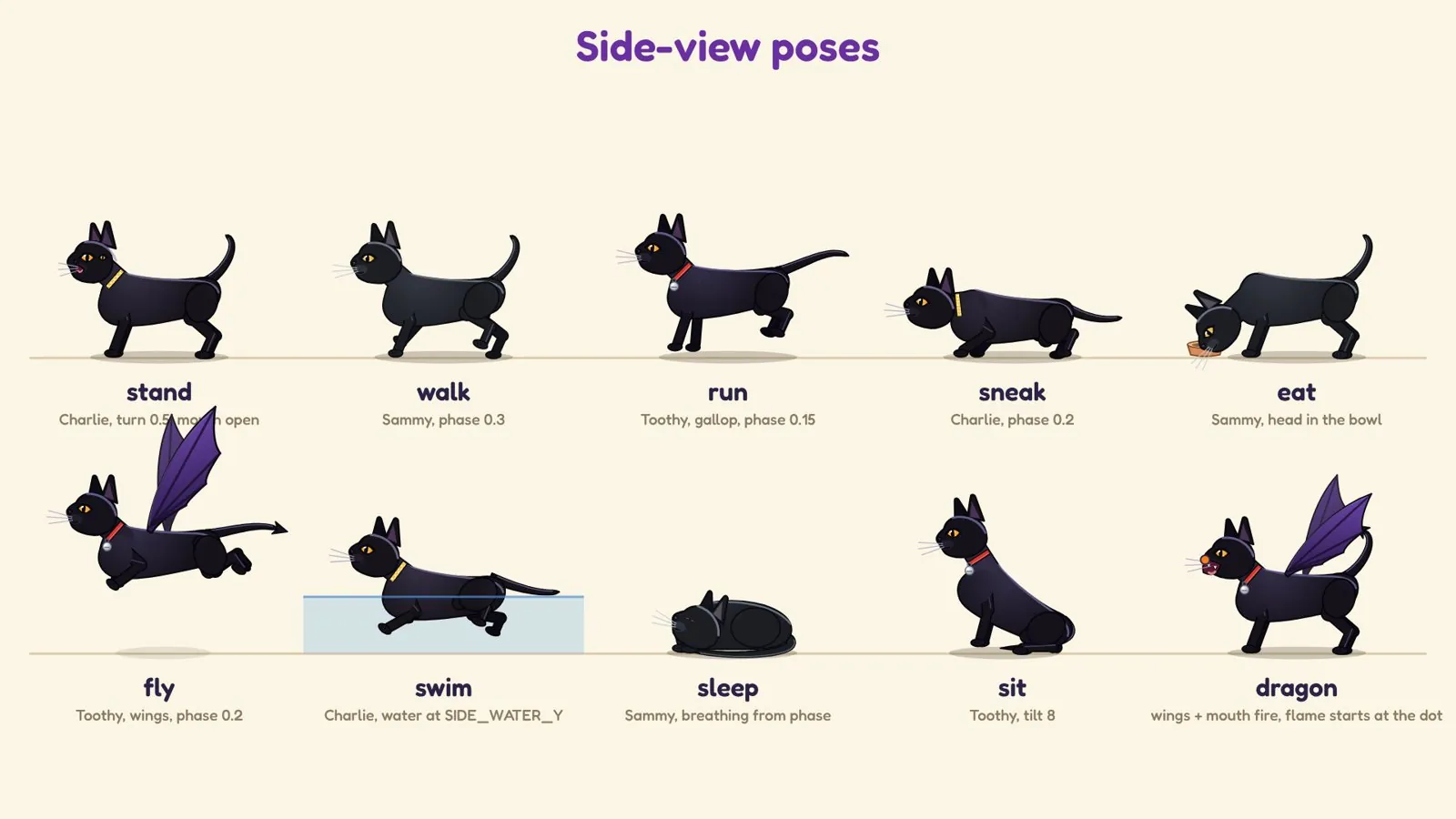
Here is the difference. Drag the line across the picture: the first version is on the left, the rebuild on the right.
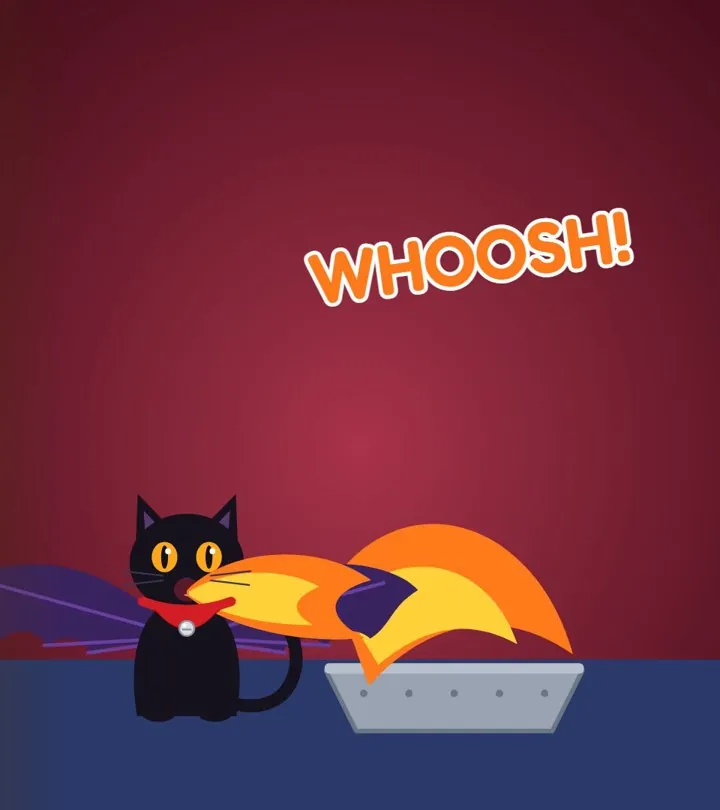
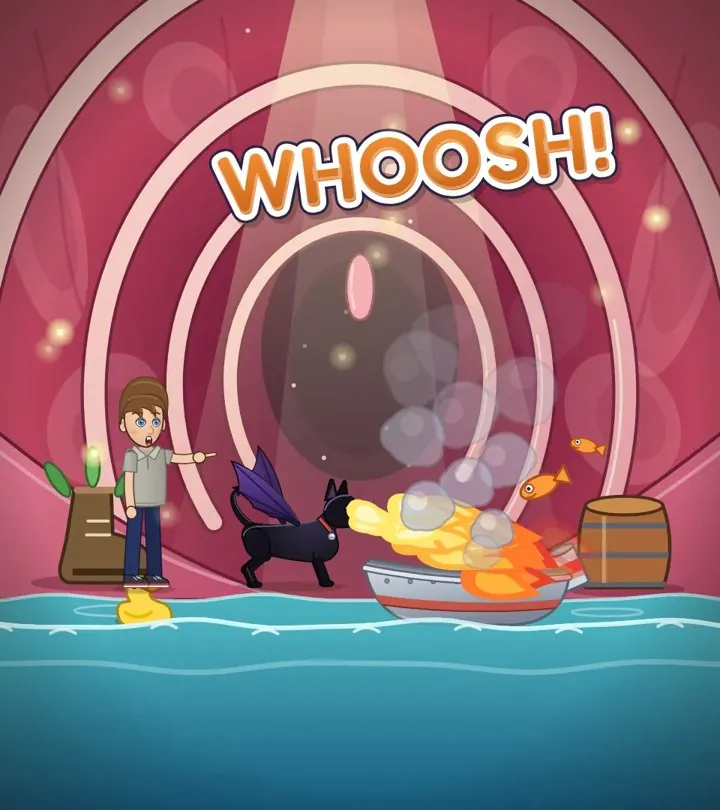 First versionRebuild
What the kids thought
When I asked the kids what they thought of the story videos, the reviews were "very good, very good" and "they're cool." The real answer came when I asked whether they wanted more. More Toothy the Dragon Cat stories? "Yes, yes, yes." Should we make this something we do all the time? "Yeah!" One every night, they said. I told them I don't know about every night, but maybe often.
Flip through it
The video at the top of this post is a minute of it, with my voice and the read-along highlighting. Here is the whole book, to flip through at your own pace:
What it cost
Nothing beyond the Claude plan I already pay for. The speech-to-text, the video tools and the rendering are free and local (plus a little electricity), running on my own equipment. The whole thing took a few hours one evening.
Why I like this one
My kids will remember a time before AI and experience it as it develops, the same way I grew up with dial-up internet. I want them to meet it as a tool that can do amazing things: one that can turn into a fun project, or expand your creativity. There is a lot of negative talk about AI, and many of the concerns are legitimate, but that is not the message my young kids should be getting.
Get new posts by email or RSS
More to read
Laundry Is Done: The Home Assistant Automation That Won't Let Wet Clothes Go Musty
The house says when the washer is done, and keeps saying it until someone opens the door.

Ben Holden is an environmental engineer. Outside work he does home automation, AI projects and a lot of do-it-yourself projects. God, family and his kids are at the center of all of it. More about me · LinkedIn